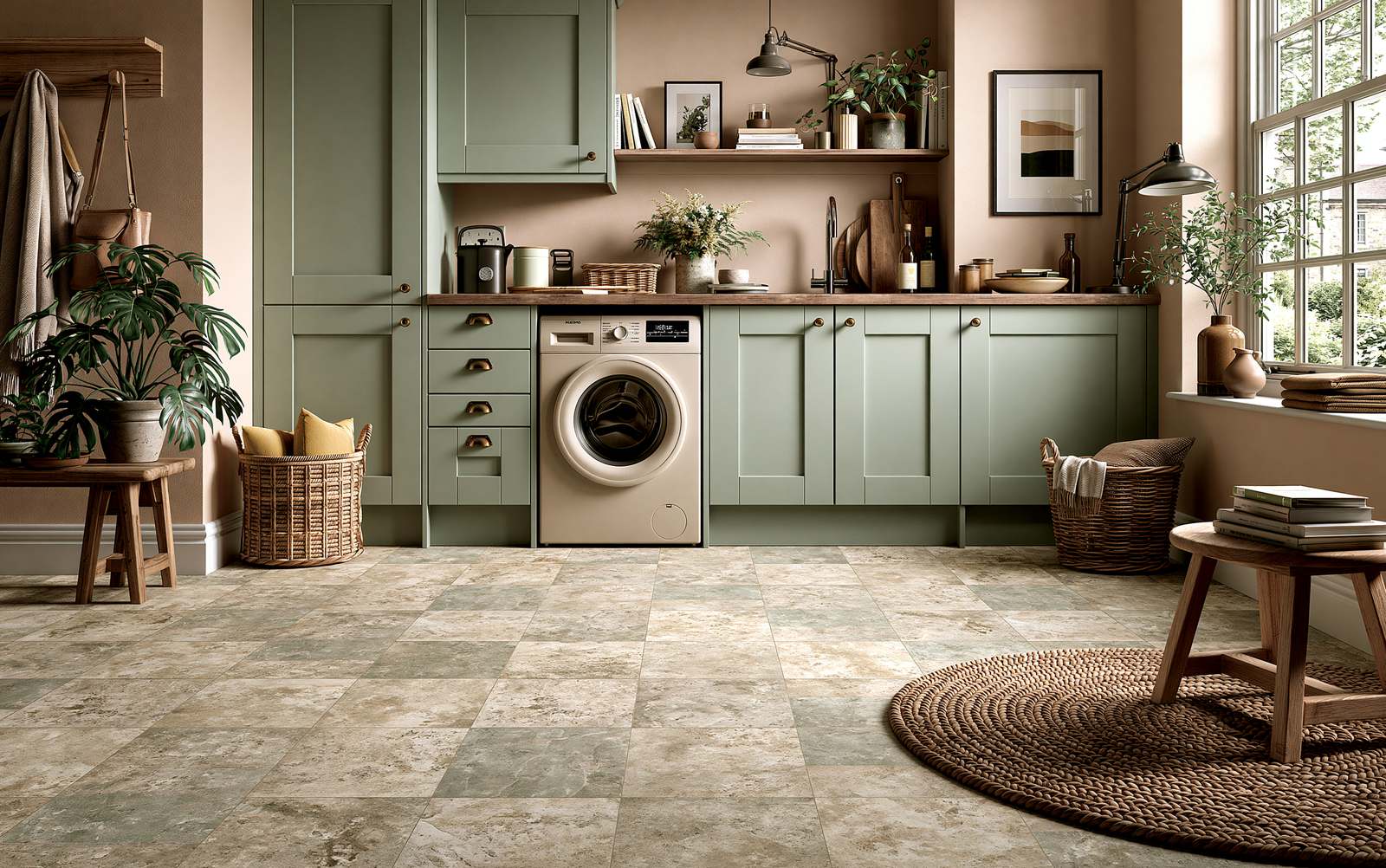
Quick answer
Sheet vinyl is a continuous, water-resistant floor covering supplied in rolls, ideal for kitchens, bathrooms and utility rooms because it has few or no seams for water to get through. We supply and fit sheet vinyl across Burton-on-Trent. A smooth, clean subfloor is essential, so send your room sizes and subfloor details for an indicative estimate.
Sheet vinyl (sometimes called cushioned vinyl or lino, though true linoleum is a different material) is a practical, comfortable and water-resistant floor. Because it comes as a continuous sheet, it suits rooms where you want to limit joints — kitchens, bathrooms and utility rooms in particular.
The finish depends heavily on the subfloor: sheet vinyl shows every lump and hollow underneath it, so smoothing the floor first is usually the most important step. We supply and fit sheet vinyl, and can fit vinyl you've provided.
Who this is for
- Homeowners updating a kitchen, bathroom or utility floor
- Landlords needing a hygienic, wipe-clean and cost-effective floor
- New-build owners fitting practical rooms before move-in
- Anyone wanting a soft, warm feel underfoot in a wet room
Suitable applications
- Kitchens, bathrooms, cloakrooms and utility rooms
- Rooms where water resistance and easy cleaning matter
- Spaces where a seamless or near-seamless floor is preferred
What's included
- Advice on vinyl type, backing and slip resistance
- Supply of the chosen sheet vinyl, or fitting of vinyl you provide
- Templating and cutting to the room, trimming around fittings
- Bonding or securing as appropriate to the subfloor and room
What isn't automatically included
- Smoothing or self-levelling the subfloor unless quoted (often needed)
- Removal of sanitaryware or kitchen units unless agreed separately
- Uplift and disposal of old flooring unless included
- Sealing of edges in wet rooms beyond what's specified
What we need to give you an estimate
- Which room, and its rough dimensions and shape
- The subfloor — concrete, floorboards or chipboard, and its condition
- Whether there are fitted units, a toilet or a bath to work around
- The current floor covering and whether it needs removing
Why the subfloor matters so much
Sheet vinyl is thin and flexible, so it takes on the shape of whatever is beneath it. Old tiles, gaps between floorboards, or a rough concrete surface will telegraph through as visible marks and can wear the vinyl prematurely. This is why a plywood overlay or a self-levelling compound is often recommended before fitting.
Preparation to consider
- A smooth, clean, dry and firm subfloor — often plywood or self-levelling compound
- Old flooring lifted where it would affect the finish
- Room templated so the sheet fits neatly around units and fittings
- Edges and doorways finished with the appropriate trims
Likely project stages
- Send room and subfloor details for an indicative estimate
- Measure, assess the subfloor and confirm any smoothing work
- Receive a written quotation with the agreed scope
- Fitting arranged once the subfloor is prepared
Honest limitations
Sheet vinyl is best kept to rooms that suit a continuous sheet. Large or awkwardly shaped areas may need a seam, which is planned to be discreet and away from wet zones.
No price is shown here. Because subfloor preparation varies so much, the cost is confirmed by quotation after a measure.